VO Tech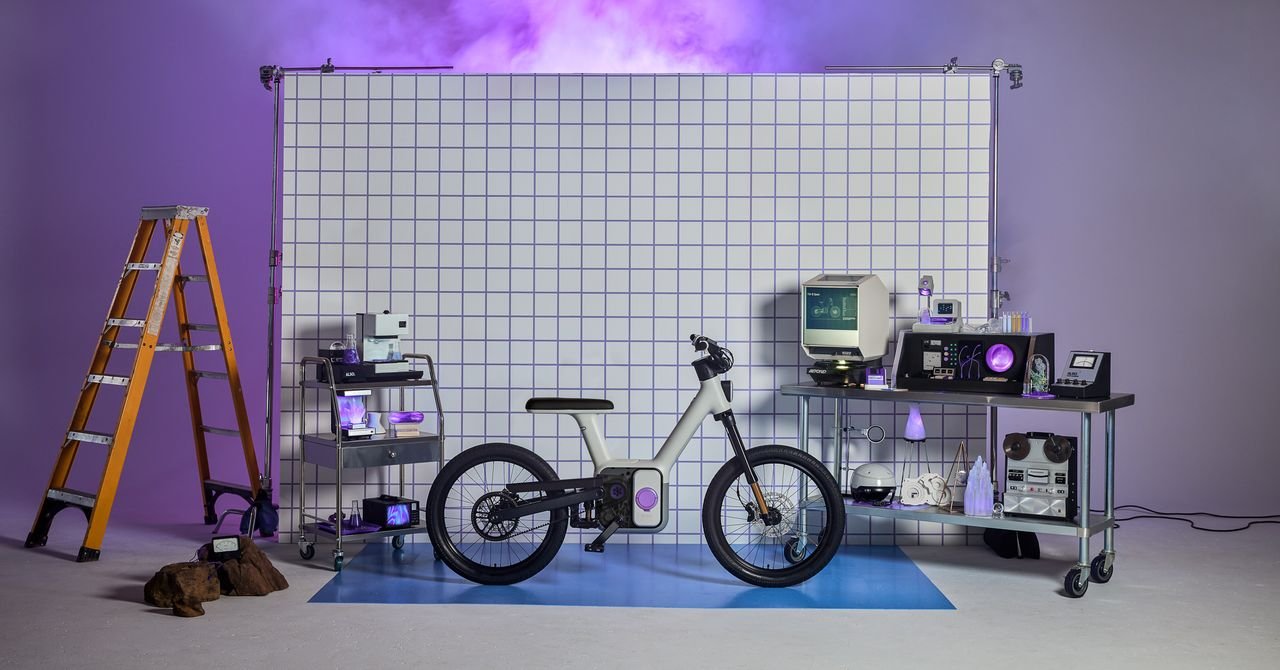
It’s hard to remember now that people used to be skeptical about electric bikes. Cyclists didn’t want unlicensed motor vehicles in bike lanes; people who didn’t bike found them to be dangerous. Even as more people adopt them to deal with carbon emissions or traffic, ebikes still have many issues. Cheap ones are impossible to repair. The nice ones have gut-punch prices, especially if this is your second or third vehicle. They have a learning curve when it comes to riding.
I’ve been reviewing electric bikes for years and, as many reviewers do, tend to evaluate them as an assemblage of different specs. High-quality proprietary frame, Bosch motor, safety certifications? More expensive. Direct-to-consumer, cheap brakes, no safety certifications? Less expensive. In my defense, this is the way that all bikes—not just electric ones—are marketed and sold. When Chris Yu, president of Rivian micromobility spinoff Also, asked me to guess how much the company’s new ebike costs, given its capabilities, I shouted, “Uh, $25,000!” as I joyfully sped down the street on the two-wheeler.
Yu—riding next to me on an Also electric bike—laughed. Also’s base model TM-B that is available for preorder today costs less than $4,000, much less than my own Tern GSD ebike. The company is announcing two additional models, the TM-B Performance and the TM-B Limited Launch Edition, in addition to two quad vehicles for cargo delivery. I am generally skeptical about car manufacturers launching electric bike lines, but I don’t think this is a stunt. I really like this bike.
Video: Adrienne So
Power On
Also can pull off this feat partly because the company is a Rivian spinoff. That’s not to say the two companies are the same—Yu was careful to note that the companies are totally separate; Rivian holds a minority stake, while Also has raised its own funds. Rivian’s health as a company does not directly affect Also, but it makes some of the bike company’s advantages, like being able to purchase a bike at a Rivian dealership, a little more difficult to realize should Rivian struggle.
The company’s bikes will also be repairable at Rivian locations, which solves one of my major frustrations with ebikes—all the proprietary components often make them exceptionally difficult to repair.
Like Rivian, Also opted to redesign the electric bike from the ground up. “We took this vertically integrated approach that Rivian has taken in the automotive space and re-optimized it, and re-sized it, for modes that are smaller than a car,” Yu says. The heart of this system is a drivetrain called DreamRide. Yu refers to DreamRide as “pedal by wire.” There are no gears, no derailleurs, no internal hub for shifting. Instead, a computer with a removable battery sits in the base of the aluminum alloy frame.
#TMB #Ebike #Specs #Release #Date #Price #Features